• This is default featured slide 1 title

    Go to Blogger edit html and find these sentences.Now replace these sentences with your own descriptions.This theme is Bloggerized by Lasantha Bandara - Premiumbloggertemplates.com.

  • This is default featured slide 2 title

    Go to Blogger edit html and find these sentences.Now replace these sentences with your own descriptions.This theme is Bloggerized by Lasantha Bandara - Premiumbloggertemplates.com.

  • This is default featured slide 3 title

    Go to Blogger edit html and find these sentences.Now replace these sentences with your own descriptions.This theme is Bloggerized by Lasantha Bandara - Premiumbloggertemplates.com.

  • This is default featured slide 4 title

    Go to Blogger edit html and find these sentences.Now replace these sentences with your own descriptions.This theme is Bloggerized by Lasantha Bandara - Premiumbloggertemplates.com.

  • This is default featured slide 5 title

    Go to Blogger edit html and find these sentences.Now replace these sentences with your own descriptions.This theme is Bloggerized by Lasantha Bandara - Premiumbloggertemplates.com.

Showing posts with label Saving. Show all posts

Monday, May 2, 2016

The very FIRST thing in Personal Finance


Until now, when teaching in Personal Finance, a lot of gurus still emphasize the very first thing is to identify a Goal.  While that is true but there are a few disadvantages with that approach;

  • You may or may not have a clear definite goal to start with
  • It may take a venture itself to find your goal
  • It may require a lot of discipline to keep to a goal
  • Your goal may change over time
  • This method is too academic oriented

By the time you clearly define a goal, the time has passed and in personal finance, time should be your best friend, not foe.
    Hence a more practical approach in this century is to just to go ahead and

    SAVE FIRST

    It doesn't matter who you are, what you do, where you are, which belief you have and how you live;  Just go ahead and put aside a sum of money and save them aside, to anywhere.

    Not only you should just Save First, if possible, think of a way to make it an ASS - Automatic Saving System.


    Read more
    Share:

    Tuesday, July 26, 2011

    Widget : How Much Tax Can I Save ?

    Half of year 2011 has already passed. Have you ever thought of your next tax filing yet ? If you only take a look by next year, then it may be too late for you to optimize anything anymore. Try below widget and see how much the impact may be for you ! Just enter your total annual income and see how much tax you can save simply by planning early !!

    Share:

    Monday, July 25, 2011

    Malaysia Best Rates 2011 July 25 Update

    Fix Deposit


    Affin Bank still offers the highest 3.6% for 12 months. 3.1% to 3.35% is common with all other banks. 1 month FD is mostly at 3% to 3.05%. Most of the foreign banks continue to offer lower FD rates.


    Base Lending Rate


    Most banks offers 6.6% now except JP Morgan Chase offers the lowest at 6.2%.


    Saving Accounts


    The Bank of Nova Scotia offers 2.05% while Bangkok Bank and Bank of Tokyo offers 2%


    CIMB Air Asia Saver Account offers 1.6%


    Don't forget you can get a simple widget
    like above to show on your blog / web site.
    Just visit here to see how.


    Car Loan


    Maybank continues to offer the lowest car loan rate starting from 2.7%. However, this is NOT a standard rate apply to all applicants. The actual rate can range up to 4.3%. Alliance bank on the other hand offers 2.8% to 3% which may be a better deal in general sense.


    Bank Muamalat offers 2.85% for both New and Used cars but it requires an admin charges of RM600.


    CIMB offers 3.25% for used cars.


    Don't forget Car Loan rate is Fix Term Rate
    which is effectively a MUCH HIGHER
    than variable term rate
    like House Loan and Fix Deposit.


    House Loan


    There are too many factors in considering a good house loan, so we don't think its fair to simply summarize them here.


    Our advice is to source for at least 3 offers, preferably a mix of local and foreign banks.
    Share:

    Friday, September 24, 2010

    Easy Retirement

    This is an extract of what I read in today's newspaper. More and more people start to carry this type of alternative concepts about retirement especially in this 21st century. You can't say its wrong. As a matter of fact, its a rather SMART way to go. But lie within is a huge hidden risk.


    The titles in above newspaper read:
    1. you don't need much during retirement, coz your liability has reduced
    2. living frugal is not hard, mentality is the key
    3. you don't need to prepare to retire ?
    By the time you retire, you probably don't have any more house loan or car loan to serve. Your body does not allow you to earn that much anymore. Chicks don't get attracted even if you sit in a Porsche. The bigger house you live in the harder it is for you to take care of it. In short, many people plan to 'maintain' their CURRENT lifestyle when they play for their retirement. The fact is you WILL NOT live the SAME lifestyle even if you are financially able to.


    Basically the idea of save or accumulate enough so that you can STOP WORKING one day is solely base on the assumption you don't really LIKE what you are doing. You are just doing it for the sake of money or future retirement. Hence when you no longer need that money, you will want to stop working. But what if you REALLY LIKE what you do for a living ? Would you stop even if you have enough money for the rest of your life ? Be it Bill Gates, Warren Buffet or that happy old man by the street ... the answer is obvious. You will keep on doing what you like even if you retire or don't HAVE TO DO IT.


    And if you have been doing something that you like for so long, the chance is that you don't really need to worry about living expenses since a long time ago. Incoming cash flow will persist and hence you don't really need to worry or prepare for a retirement. Coz you don't want to retire !!


    What do you think about this easy retirement methods ? In contrast to the fundamental of save, invest and accumulate until you have enough to fight against the inflation etc. ?


    Which do you prefer ?
    Share:

    Tuesday, September 14, 2010

    There is NO such thing as Passive Income !?


    21st century personal finance is moving away from saving and focus into the income arena. In short, the gurus are now educating public that saving is NOT good enough, hence sourcing for passive incomes on the another hand is a BETTER solution, than just saving alone.


    While the concept is definitely true and correct but unfortunately as the hypes go bigger and bigger, the idea of passive income has been abused and more scams started to appear in the market, as if they were the gurus as well. Except the 'passive income' they refer to is barely promoting their own original same old products. The personal finance market has become so competitive that even some real gurus have no choice but to go beyond the line in their marketing effort - Robert Kiyosaki is no exception in spreading "Saving is bad".


    Although passive income is very well defined here using income ratio 1:100 but is there really such thing as Passive income ? When I looked up dictionary, these words come up


    PASSIVE : not participating, inactive, not reacting, inert or quiescent.


    None of these words correctly describe a well implemented passive income. I use my best judgement to find a good location, a value property and a pay master tenant. I setup a profit take target and an exit strategy in my investments before I leave and let them auto pilot. All of these are very participating, actively applying my knowledge and experience, reacting appropriately when necessary etc.


    The word "Passive" also gives people a psychology of No Need To Do Anything; As if an easy to get rich scheme with a better cover.


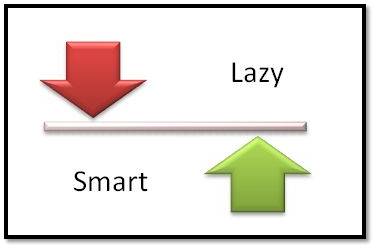
    Hence this article wants to pursue all readers to stay away from the term Passive Income. Its negative, misleading and now abusive by the over-stress marketing effect. Instead, think of Smart Income !


    There is no hard and fast rules for Smart Income. Any income can be earned the regular way or the Smart way !


    An employee can use minimum of his time effectively to earn the highest salary or benefits. A self employ can easily leverage on Internet to earn income repeatedly. A business owner can employ a system to run his business. An investor can setup an autopilot mechanism.


    So no matter which income quadrant you are in, it is possible for you to turn that income into a smart one. Its a matter of HOW you earn your income, NOT WHAT you do.


    Are you pursuing smart income ?
    Share:

    Monday, August 30, 2010

    Should I buy that nice little dress/gadget ?


    You may think the $1 spent is the same $1 earned. Its really NOT ! One of the fundamental flaws human cannot control their own spending habits is because they DO NOT UNDERSTAND the value of money at the first place. The $1 spent could be equivalent to as much as $7-$10 earning !!

    For example if you earn $4,000 a month and you manage to save $400 every month. By year end you would have saved aside $4,800. This money is intended to be put aside earning interest as part of the MeM (Money earns Money) mechanism. So its not just $4,800. It will be more than that as time goes. The longer it is kept there the more powerful compounding factor is working for you.

    Says you take out $1,000 from this saving at year end for an unplanned luxury expense. Its not just $1,000 you have used. You have actually dug a hole in your saving - a 21% hole. If you saving return is 3%, it will take more than 7 years for this hole to be refilled back to its original amount. So you have practically used up your future 7 years on this saving for this unplanned expense.


    On the other hand, if it took you 2.5 months to save that $1,000; Out of your equivalent earning of $10,000. For every $1 you use from your saving, you will have to earn $10 to get that $1 back. So when you use that $1,000 its not just $1,000 you have to replace but actually a $10,000 worth of your earning.

    Does this particular unplanned luxury expense really worth your future 7 years and/or your $10,000 earning power ?

    They money you get in ( earn ) does not necessary carry the same meaning to you as the ones you get out ( use ). Especially when there are so many deductions and taxes in this modern world.


    It is best to put aside another $100 saving every month for 'unplanned luxury expense' category. That way if you really have to use it, you will still have $200 left ( after a year of saving ). More if somehow you are able to put that aside and go for a better future good.

    If you have no such ability for this new saving category, try to increase your income or else settle with NOT use beyond your means.

    At the end, this is the ONLY concept that determine if a person is an investor or a consumer all his life. Everyone want to buy Porsche and LV bags, some did it diligently, some others cost in their lives.
    Share:

    Wednesday, August 18, 2010

    Economy Politic Finance Quadrant

    There are 2 BIG main external factors affecting our investment decisions
    • Economy
    • Politic
    When the time is really bad (economy downturn and politically unstable), its best to park your money under something that is really stable, ie Gold. Which is by definition usable anywhere you go in anytime.

    When its good time, invest direct to the stock market would yield very good return.

    When the economy is not so good in a strong country, the government bonds or related money market would be able to yield higher return than just gold.

    However, the most dispute solution in good economy unstable country is investment in property. This is mainly due to easier rental and higher chance of capital gain.

    By simply moving money around depends on the political and economy situation, one was able to achieve more than 12% compound return for the past 20 years. That is equivalent to a 10X return.

    But by no mean this is easily done. Some of the concerns include;
    • how would one know exactly when economy/politic turns good/bad ?
    • is Gold the ONLY option ?
    • property may not easily liquidated
    • how to choose which property or stock market ?
    . . . which can be explored further.
    Share:

    Wednesday, March 10, 2010

    Malaysia Best Rates 2010 March 11 update


    1 month Fix Deposit

    Most banks offer 2.25% now except a few ones. Most of the ones who are still stuck at 2.0% are international banks like Bank of China, JP Morgan, Bank of Nova Scotia and Alliance banks.

    1 year Fix Deposit

    Highest offered rates is 2.75% by Affin Bank, AmBank, Bangkok Bank, Bank of Tokyo-Mitsubishi UFJ, Deutsche Bank, Hong Leong Bank, Malayan Bank.

    Base Lending Rate

    Most local banks stand at 5.8% now with Affin offers the lowest at 5.75%. International banks offer lower rate starting from 5.50% by Royal Bank of Scotland.

    Saving Accounts
    Kuwait Finance House continues to offer highest saving interest rate in its KFH Savings Account-i at 1.5%. This account is also very simple and straight forward.

    Other than that, Standard Chartered's Al-Wadiah Savings Account-i offer 1.0% for up to RM 10,000 savings.

    CIMB's Air Asia Savers Account and Mudharabah Saving Account-i also offers 1.0%.

    Other accounts who seems like offering high interest rate but require high amount of saving are excluded. Some special accounts like OCBC's iQ Saving is also excluded because their offer rate may seems high at 3.28% but their effective rate is hard to simplify for general public. In short, for those accounts, if you use up the benefits they offer then it would be a great deal but if you do not use any of those stuff then its better you stick to a lower but 'real' rate, simpler and more straight forward saving account.


    Don't forget you can get a simple widget
    like above to show on your blog / web site.
    Just visit here to see how.

    Car Loan : NEW Car

    Maybank continues to offer the lowest car loan rate starting from 2.7%. However, this is NOT a standard rate apply to all applicants. The actual rate can range up to 4.3%.

    Bank Muamalat offers 2.85% for both New and Used cars but it requires an admin charges of RM600.

    Most other banks rates offer are 3.25% for New cars.

    Car Loan : Used Car

    CIMB offers the lowest 3.25% used car loan rate.

    Most of other best used car loan rates offer are 3.75% by Affin, Hong Leong Bank, Alliance, EON and RHB.

    Don't forget Car Loan rate is Fix Term Rate
    which is effectively a MUCH HIGHER
    than variable term rate
    like House Loan and Fix Deposit.

    House Loan

    Affin remains as the best house loan offer at BLR - 2.3%.
    Standard Chartered offers BLR - 2.25%

    Most banks offers are BLR - 1.8%.

    Multi-tiers house loan offers are excluded because it would be impossible to simplify their pro and cons without knowing the actual details of your particular loan details. Hence, only simple and straight forward house loan offers are compared.

    Share:

    Monday, January 18, 2010

    HLA Guarantee 12.5% saving plan

    Hong Leong Assurance offers a plan that guarantees 12.5% return. Basically you only need to save $3,932 for 6 years and you are guaranteed to receive $500 every year starting from the 1st year for 35 years.

    So 500 out of 3,932 is more than 12.5%

    $500 x 35 years would give a guarantee amount of $17,500. If you do not withdraw this money, it will accumulate more interest. On the 35th year, you will get $50,126 instead of just the $17,500.

    In addition, there is a dividend payout where the minimum is expected to be $200. Not guarantee but pretty guaranteed as in insurance layman terms. With the most conservative assumptions etc. you will get more than $105,000+ at the end of 35 years.

    Most of the older readers should know this trick by now. There is no such thing as insurance saving that gives guarantee and higher than Fix Deposit return in normal circumstances.

    If you save the same $3,932 in a bank account that gives you 1.72%, it will give you a total $41,082 on the 35th year; equivalent to the guarantee yearly $500 plus capital preservation. So the guaranteed return you are really getting is less than 1.72%. Because your capital is NOT guaranteed in this plan.

    If you keep the $500 and go for the guarantee $50,126 return at the end, that is equivalent to 2.35% return. Currently bank is offering 2.5% FD rate for annual renewal.

    Lastly if you are really getting back $105,862 at the end, that is equivalent to 4.72% annual return.

    Consumers need to know what the effective rate is when comparing plans. For crying out loud, insurance field agents please upgrade yourself and calculate what the real effective rate is. May be you don't need to tell everyone about it but when some personal finance savvy consumers asked about it, it is more reputable if you can give some valid figures.

    4.72% is NOT a bad return at all. But 35 years is too long.

    Share:

    Monday, January 11, 2010

    Different types of retirements


    There are many ways to retire. Some are easier than others. And some still think there is no way they can retire at all :)

    There are 2 main factors in retirement;

    1. IN : how much do you have and
    2. OUT : how much will you use during your retirement

    So naturally if you have more IN than OUT then you can retire.

    One of the ways is to calculate how much your OUT would be and then accumulate IN as fast as possible. You may have read that its rather simple for a single woman to retire at young age.

    There are 2 main influence on the figure OUT;

    1. if you live a luxury life, it may take longer to retire ... if ever ...
    2. if you live frugally, you may retire sooner.

    Some may think they live frugally but actually they may have been spending more than they should. A good way to quantify your OUT is to look at how you have been expensing for the past 10 years. It would most likely be how you will spend in future. The way we use our money is deeply embed in our subconscious. Its easier to discover it than to change it.

    Once you have figured out how much you need to retire, you can work on the IN part. There are 2 ways to accumulate your IN;

    1. Lump sum : save as much as possible until you reach the same amount as OUT, then retire.
    2. Passive income : find a way to consistently receive your IN in smaller amount but continuously without doing much.

    Now the key of successful retirement is you will need BOTH ways to accumulate your IN. Simply put, keep your day time job and start learning and building your passive income at the same time.

    Problems come when some focus only on one Lump Sum to achieve retirement but a sudden expense surge in future may kick them out of their retirement. Some others only aim at luxury goals by only pursuing passive incomes neglecting the use of Lump Sum Saving method as a backup plan.
    Share:

    Sunday, January 3, 2010

    Best Retire Young ? How possible is it ?


    Is it best retire young? Have you ever heard some people retire early at their 30s ? Do you think they got lucky or they must have own some businesses to become rich before they can retire ? Here are the stories of 2 persons who retired at their mid 30s and they only have worked for other people before.

    ( due to consent issues, the figures are generalized just to illustrate the concept )


    They started working at their early 20s with starting salaries of $1,800 to $2,000. After more than 8 years of working, their monthly income were more than $6,000 and then it didn't increase any much further after that. Usually the salary big jump occurred during career move and they have changed career once or twice. Together with bonuses, they have earned a total of $800,000 in total after 12-15 years of working.

    Through out those time, they have saved aside a total of $175,000. Initially they save their money in fix deposit getting about 2-3% return but very soon they move on the mutual fund and stock market. Over the years, their average return is 6.3%. So when they retire, their savings are more than $260,000.

    Their monthly expenses is about $1,000 and their personal inflation rate for their life style is 2.8%. So with this saving alone, it can last them until age 75.

    They also have an EPF ( like 401K ) that is more than $100,000 at their mid 30s. When they can withdraw it at their 55, they should get at least $200,000. With this, they will still have a $500,000 balance when they are 100 years old. Of course they don't plan to live that long but this is their surplus money.

    At the time they retired, they also have a home and a vehicle that are already fully paid off. The property was worth $100,000. They ended up paying about $120,000 for it with their 10 years loan. Conservatively this property is expected to worth more than $200,000 when they are 60 years old, just in case and in time for them to enter old folks home where care and friends are around.

    The first few years they retired, they literary sit around doing nothing. But very soon they got bored and started interacting with they industry they are used to. From time to time, they provide freelance consultancy to their friends and earn some extra income too, ie. $10,000 to $20,000 a year sometimes. With these incidental incomes, it pushes their 100-year-old left over to $3 millions !!

    They may have lived frugally all along but they are enjoying life the luxury way more often now. They don't run any business, they didn't get any lucky in their investments but they must have been good at their jobs because someone actually paid for their services after they retired. But then again, a $10,000 yearly consultancy fee doesn't sound like a real consultancy at all, its more like a very small incidental assistance in one small project only. On the other hand, a $6,000 salary employee is a good employee but its no where near CxO positions neither. So there can be many good employees, this is not one of those only-one-man-scenario.

    Some of the keys to their early retirement would be;
    • Save First
    • Live frugally first
    • learn to invest
    • bought a motorcycle - just to get around
    • bought a small apartment - just enough for him and his visiting friends
    There is really no trick here. If there has to be one, they are singles. Some of them may be married but with no dependencies, meaning no need to take care of parent and no kids.

    It is really not that hard to retire young.

    One last key difference between young retirees and others, their hobbies do not cost them money. As a matter of fact, some other young retirees actually make their hobbies their life time businesses after they retired.

    Share:

    Saturday, December 26, 2009

    BEST rates in Malaysia - update 2009 12 26


    Although Fix Deposit rate stays at 2% for 1 month and 2.5% for 12 months but generally FD interests are 'starting' to rise. This is inline with the speculation that interest rates will be raised by Bank Negara ... and its just a matter of time. This trend will affect both FD rate and BLR.

    Three Banks have the lowest BLR since mid 2009 : 5.25%
    The Royal Bank of Scotland Berhad
    Bank of Tokyo-Mitsubishi UFJ (Malaysia) Berhad
    J.P.Morgan Chase Bank Berhad

    But most loans come in terms like BLR + or - another numbers. Remember to compare your own true and effective loan rate including fee++ before deciding on a loan package. Usually these lowest BLR banks also offer less attractive effective final rates ie. BLR - a lower number. Some other deals that follow strictly on BLR on the other hand, would be great to deal with these banks.

    The highest saving account interest is 1.88%
    Mudharabah Basic Savings Account-i by CIMB Bank Berhad
    minimum deposit RM 20
    interest calculated daily, compounded monthly

    The actual rate may only be 1% now. I suspect that they haven't update their marketing system yet. The actual rate payment is on a profit share bases, so the rate is not really as 'guaranteed' as other saving accounts. But historically, statistically and even politically you will most probably be getting back slightly higher interest than promised. For how long no one knows ...

    However, this is still the best choice for a saving account. Other banks' Al-wadiah or Mudharabah accounts are ok too.

    Some offers 1.5%
    J.P.Morgan Chase Bank Berhad - Saving Account, calculated daily,compound every 6 months
    Bank of America - BBS Saving Account, calculated daily,compound every 6 months
    Bangkok Bank - Basic Savings Account, calculated daily,compound every 6 months

    The other high interest accounts 1% are
    The Bank of Nova Scotia Berhad - Basic Savings Account, calculated daily,compound every 6 months
    Bank of Tokyo-Mitsubishi UFJ - Savings Account, min RM200, calculated daily,compound every 6 months

    Best Car Loan rate for New Car is 2.7% by Maybank
    Bank Muamalat offers 2.85% but its effective rate could be lower than Maybank. But it has a RM600 admin charge. Both banks can have up to 90% margin and 9 years tenure.

    Bank Muamalat offers the same rate for Used Cars. That makes it the BEST rate for used car loan. Late payment charge in Bank Muamalat is only 1%, compares to the normal practice 8% in all other banks.


    Share:

    Monday, October 26, 2009

    MYR 300 FREE money for self employed

    Budget 2010 has been around for a while now, but I wonder why many have not made a big deal about this yet. If you are a Self Employed in Malaysia, you can open an EPF account yourself and save MYR 100 into it every month. In return, Government will add MYR 5 into your saving too. This is expected to start next year and 5% top up will continue for the next 5 years.

    Although $60 a year is a small money but are you sure you want to pass on any FREE money ?


    Assuming EPF declare a dividend of 4%, you will get more than MYR 10,670 5 years down the road out of the MYR 6,000 you have been saving. MYR 100 x 12 months x 5 years.

    If you save the same MYR 100 monthly else where, it will need 22.01% interest rate to obtain the same return 5 years down the road.

    22% passive return is not something available readily anywhere in the market. The only con side of this offer is its limit of MYR 300 contribution from the govertment in the next 5 years. Which is pathetically little. Then again, it also means it doesn't hurt at all to save the extra MYR 100.

    Comes to think of it, is Someone intentionally trying NOT to pay out this FREE money by NOT promoting it as it deserves ? So they may declare a good policy change but keep things quiet and then at the end they can say, "it's you who didn't take our offer!"

    Proceed with care and patient, EPF department does NOT know how to handle this yet ... their typical responses are, "Come back next year ..."
    Share:

    Labels

    Blog Archive

    Recent Posts

    Unordered List

    Theme Support