• This is default featured slide 1 title

    Go to Blogger edit html and find these sentences.Now replace these sentences with your own descriptions.This theme is Bloggerized by Lasantha Bandara - Premiumbloggertemplates.com.

  • This is default featured slide 2 title

    Go to Blogger edit html and find these sentences.Now replace these sentences with your own descriptions.This theme is Bloggerized by Lasantha Bandara - Premiumbloggertemplates.com.

  • This is default featured slide 3 title

    Go to Blogger edit html and find these sentences.Now replace these sentences with your own descriptions.This theme is Bloggerized by Lasantha Bandara - Premiumbloggertemplates.com.

  • This is default featured slide 4 title

    Go to Blogger edit html and find these sentences.Now replace these sentences with your own descriptions.This theme is Bloggerized by Lasantha Bandara - Premiumbloggertemplates.com.

  • This is default featured slide 5 title

    Go to Blogger edit html and find these sentences.Now replace these sentences with your own descriptions.This theme is Bloggerized by Lasantha Bandara - Premiumbloggertemplates.com.

Monday, January 11, 2010

Different types of retirements


There are many ways to retire. Some are easier than others. And some still think there is no way they can retire at all :)

There are 2 main factors in retirement;

1. IN : how much do you have and
2. OUT : how much will you use during your retirement

So naturally if you have more IN than OUT then you can retire.

One of the ways is to calculate how much your OUT would be and then accumulate IN as fast as possible. You may have read that its rather simple for a single woman to retire at young age.

There are 2 main influence on the figure OUT;

1. if you live a luxury life, it may take longer to retire ... if ever ...
2. if you live frugally, you may retire sooner.

Some may think they live frugally but actually they may have been spending more than they should. A good way to quantify your OUT is to look at how you have been expensing for the past 10 years. It would most likely be how you will spend in future. The way we use our money is deeply embed in our subconscious. Its easier to discover it than to change it.

Once you have figured out how much you need to retire, you can work on the IN part. There are 2 ways to accumulate your IN;

1. Lump sum : save as much as possible until you reach the same amount as OUT, then retire.
2. Passive income : find a way to consistently receive your IN in smaller amount but continuously without doing much.

Now the key of successful retirement is you will need BOTH ways to accumulate your IN. Simply put, keep your day time job and start learning and building your passive income at the same time.

Problems come when some focus only on one Lump Sum to achieve retirement but a sudden expense surge in future may kick them out of their retirement. Some others only aim at luxury goals by only pursuing passive incomes neglecting the use of Lump Sum Saving method as a backup plan.
Share:

Saturday, January 9, 2010

Some data on Malaysia Property

First of all, Malaysia property is one of the cheapest in the region ... so smaller foreign property investors ( less than 10 millions) who are interested in this region may be interested in us.

Our rent is also low ... so its rather easy to rent a place and start business here. So this means its rather easy to rent out your property ... especially if you explore with foreign business men.

The interesting part is our rental yield is quite high at 8.86%. This is actually common in developing countries. This ... however ... will go down in years to come.


This one is similar to rental yield but just shown in a reverse manner. This means you will get back your total investment rather fast in Malaysia.


The cost of both buying and selling is low too. But this usually subject to other terms and conditions like different fee imposed on different sale period.


In the past 5 years, Malaysia property has risen more than 14%

But the whole of last year is almost stagnant.
Share:

Friday, January 8, 2010

New Sabah Property : HOT !


Famous Feng Shui sifu said that new sabah property is going to continue to be HOT for the next 20 years. As a matter of fact, he refers to both Sabah and Sarawak. Some may have already seen that properties development have been on the rise in East Malaysia for some time now especially in Kota Kinabalu, capital of Sabah.

Although there have been critics that such a trend has no sustainable growth and therefore they considered it a bubble rather than a living standard up scale.

However it doesn't really matter how right they may be or how noble you are, the market doesn't really care. If it continues to have more buyers than sellers then the price will continue to trend up, despite anything else i.e. no one actually utilize those properties.


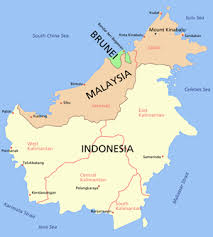
It shouldn't be too hard to understand the rise. First of all, Borneo is an island. Island has limited land. So 'eventually' the price of land will rise. Its been proven in Japan, Hong Kong Island, Singapore and even Australia ( a continent but nevertheless an island geographically). And its not just any island, its the 3rd largest island in the world. Imagine you can fit 1,000 Sinagpore in Borneo !!

But not all islands have great track record. The largest island in the world - Greenland - doesn't do so well, most of the very small one man islands do not do well neither. Is Borneo too big or could it be just nice ? New Guinea (2nd largest island) and Madagascar (4th) are both not that encouraging. The list continues down until Great Britain, the 8th largest island who obviously did pretty well in property growth. Limited land of an island may be a good starting point but other deciding factors seem to be more influential.


What other positive notes do we have ? Politics movement is good for Sabah property. As a matter of fact, due to Malaysia politics instability, the paying master political party has to move to East Malaysia. Whether or not you need houses, more will be built. How do they justify building more ? They will get buyers if you don't. Property trend is a developer's game. If they have the power to sustain selling price during bad time, the only thing left is up trend.

20 more years of HOT property growth is a surprisingly SHORT period given that it is a land of more than 700,000 square kilometers. So this prediction is actually an insult to those who truly love Sabah. The only reason why it can be hot for another 20 years is because outsiders will come in to Borneo, harvest out all the benefits and then leave. If they don't leave in 20 years time, they will start to pay just like the permanents. Where the business and finance ecology have been exploited, not to mention the environment.

How can we grow Borneo's property and leave a long term positive effect ?

1. Create MORE forestry reserve lands. this makes sure land is really limited.
2. Focus on ONE main theme - it should be along the nature's line ...
3. Form environmental alliance among Brunei, East Malaysia and Kalimantan.
4. This alliance has authoritative power over real estate development.
5. Beef up sea lines transport, bring in the industries

Then all the other developments can follow suit ...

So do we need that coal plant ? Well, I hate to ... but we do need to address the problem of water and power supply first.

If Borneo can be made into an eco-self-sustain-island, it can be the Eden for human races. Not only property will continue to rise forever but it could also be our last hope ...

And to iron out the whole architectural solutions in the next 5 years, we will need USD 20 billions now.
Share:

Sunday, January 3, 2010

Best Retire Young ? How possible is it ?


Is it best retire young? Have you ever heard some people retire early at their 30s ? Do you think they got lucky or they must have own some businesses to become rich before they can retire ? Here are the stories of 2 persons who retired at their mid 30s and they only have worked for other people before.

( due to consent issues, the figures are generalized just to illustrate the concept )


They started working at their early 20s with starting salaries of $1,800 to $2,000. After more than 8 years of working, their monthly income were more than $6,000 and then it didn't increase any much further after that. Usually the salary big jump occurred during career move and they have changed career once or twice. Together with bonuses, they have earned a total of $800,000 in total after 12-15 years of working.

Through out those time, they have saved aside a total of $175,000. Initially they save their money in fix deposit getting about 2-3% return but very soon they move on the mutual fund and stock market. Over the years, their average return is 6.3%. So when they retire, their savings are more than $260,000.

Their monthly expenses is about $1,000 and their personal inflation rate for their life style is 2.8%. So with this saving alone, it can last them until age 75.

They also have an EPF ( like 401K ) that is more than $100,000 at their mid 30s. When they can withdraw it at their 55, they should get at least $200,000. With this, they will still have a $500,000 balance when they are 100 years old. Of course they don't plan to live that long but this is their surplus money.

At the time they retired, they also have a home and a vehicle that are already fully paid off. The property was worth $100,000. They ended up paying about $120,000 for it with their 10 years loan. Conservatively this property is expected to worth more than $200,000 when they are 60 years old, just in case and in time for them to enter old folks home where care and friends are around.

The first few years they retired, they literary sit around doing nothing. But very soon they got bored and started interacting with they industry they are used to. From time to time, they provide freelance consultancy to their friends and earn some extra income too, ie. $10,000 to $20,000 a year sometimes. With these incidental incomes, it pushes their 100-year-old left over to $3 millions !!

They may have lived frugally all along but they are enjoying life the luxury way more often now. They don't run any business, they didn't get any lucky in their investments but they must have been good at their jobs because someone actually paid for their services after they retired. But then again, a $10,000 yearly consultancy fee doesn't sound like a real consultancy at all, its more like a very small incidental assistance in one small project only. On the other hand, a $6,000 salary employee is a good employee but its no where near CxO positions neither. So there can be many good employees, this is not one of those only-one-man-scenario.

Some of the keys to their early retirement would be;
  • Save First
  • Live frugally first
  • learn to invest
  • bought a motorcycle - just to get around
  • bought a small apartment - just enough for him and his visiting friends
There is really no trick here. If there has to be one, they are singles. Some of them may be married but with no dependencies, meaning no need to take care of parent and no kids.

It is really not that hard to retire young.

One last key difference between young retirees and others, their hobbies do not cost them money. As a matter of fact, some other young retirees actually make their hobbies their life time businesses after they retired.

Share:

Saturday, December 26, 2009

Never buy a property that is fully sold ?


Joseph Tan is one of the most truthful guys who shared his property investment experience. Most property investors would properly brag about how superb property investment is, a smaller group who are willing to admit their failures would curse on it. But believe it or not, Joseph Tan's story actually covers the majority of how a property investor in this region would experience after some time i.e. from the 2nd to 5th property.

Basically he wasn't fully equipped with proper tools to start with but yet making great returns in his first 3 properties. However, the 4th one turned out to be a big lesson and he is sharing it with all. (details in Alan Tan's blog )

If disaster like this happened on the 4th or 5th property, it usually break even with previous earned profit or at worst became an expensive lesson. But for some who faced it on the 2nd or 3rd property, it usually crash their whole personal finance portfolio. Those who managed to stay alive had to start all over.

Most of his sharing are malpf compliant except one controversy point : Location, Location, Location ! For those who has followed malpf long enough, they know that malpf claims Location factor in property investment is just an overweight marketing topic by the developers. You can always jump on the developers band wagon to make some money but it wouldn't be a rock solid property investment strategy.

However, the main reason to mention his sharing is his 3rd point : Don't Buy a Shop in a Fully Sold complex - because - the developer will NO longer promote the property. Generally
  • if not many people are buying, its unlikely you will buy it (something must be wrong )
  • if many people are buying, its most likely you want to buy too ( must be an opportunity, don't miss it! )
And yet he shared his priceless advice ...

There are quite some insights to this sharing.
  • even such a successful business man like him still rely on developer to 'upkeep' the property/area.
  • if the area ( complex ) is no good, your property ( shop ) is no good too.
In any investment, once you are relying on others to make profit, your task is to make sure you join them as early as you could and leave right before they leave. Its NOT a rock solid investment, its more like a speculative exercise.

I am not sure if Joseph bought the shop in Galaxy Ampang but most other smaller shopping complexes in that area faced similar fate. However, some of the 1st batch buyers back then actually earned 15-20%. They jumped out before the developer did.

I know at least 2 private owners who are still keeping properties there and do not feel that bad about it. The biggest difference is they bought the shops for almost half of what other paid for back then.

I don't know if they had foreseen they had to wait 10-20 years but they did adhere to the first part of solid property investment strategy - always buy the property lower than its worth else its NOT a good buy.

Another specific factor on shopping complex is the floor level. The hottest property investment arena in Malaysia is Sungai Wang but once you go above 3rd floor, the value and worth drop drastically. For any non hot-spot shopping complex, looks no further than ground and 1st floor. Else you are not buying a shop, you are just buying a store room. The prices are assessed quite differently.
Share:

Strategy Cost ?


"Cost" is the money you paid in order to get something you want in return.
"Strategy" can be simplified as the methods you use in achieving a goal.

Strategy cost is the money you MAY have to pay if you use certain methods but NOT necessary ... depends on how it turns out. For example,

When buying shares in stock market, you will have to pay some broker fees, stamp duty and clearing fee etc. Those are the real cost incurred. The way to calculate cost is usually fix, pre-arranged and agreed up front. Putting these fees aside, right after you bought a share at $1.00 the immediate buy back price is usually lower i.e. $0.99. The difference between this buy and sell price can be seen as strategy cost.

You don't really pay this 1 cent. If the price goes up and you earn money, you earn 1 cent less. If the price goes down and you lose money, you lose 1 cent more. So strategically you are 1 cent disadvantage to the market.

Some may say this is future costing. You actually pay this 1 cent but only deducted from your withdrawal at a later date. Although there is nothing wrong to think of it this way especially account wise, but it could be more beneficial to use strategy cost to access which strategy is better in your investment.

Strategy cost shares parallel direction as your investment movement. When you buy a share, you want its price to go up so that you can earn money. The 1 cent difference affects your ability to do that.

Strategy cost may not be fix and is usually depends on situation. If the demand for the share you bought is low, the buy back price could be $0.98 or even $0.95. So buying a low demand share is strategically more disadvantaged to buying a high volume stock. In this case its a comparisons among 1, 2 and 5 cents. No long just a general concept but a measurable comparison.

Since you don't really PAY strategy cost, it is rather vague to talk about it. But strategy cost becomes more useful when you are comparing different investment methods or different situation.

The very recent comparison is between buying something with CASH vs getting a LOAN.


Share:

Malaysia RM50 Credit Card fee waivers


It was mentioned before Malaysia's government initiative to charge RM50 tax on credit card to 'reduce' debt is a plain zany act. When confronted by many institutions and experts, Najib (some of his photos here) even goes public exercising his power to enforce his budget 2010.

Just in case you haven't heard, the time to pay this RM50 tax is the same as your annual fee due month. So if your cards are due in December 2010, you can hold it for another year before cancelling it out. But if your cards are due in Jan 2010, you better find out when the statement date is. You HAVE TO cancel your cards before the statement is generated. Once this RM50 tax is imposed, the banks will NOT be able to waive it for you even if you cancel your cards AFTER the statement is printed.

So far I only know UOB and EON banks will waive this RM50 tax for real.

You have to use your EON cards for 36 times to waive this RM50 tax. Normally you will have to use 24 times to waive its annual fee which is about RM150. So another 10 times more should be ok for those who really use the card.

UOB is one of the first banks to waive this tax in public. Varies options may be available but the one I know is just use RM300 and you will get back RM50 cash benefit to knock off this RM50 tax. UOB is also closely tighted to Robinson so if you shop there often, it could be the card to keep.

see ? The effect is already started .... you have to spend much more in order to save this RM 50 ...

All other cards who offer you RM50 rebate by using the points you have accumulated are just playing with your Finance IQ. It is a common practice that you get back a minimum of 0.2% rebate by using credit cards in this part of the world. The return may reach you either in the form of points accumulation or direct cash rebate on the bill. So giving you the option to 'waive' this RM50 tax with your points is the same like taking your money from your left pocket when you said you want to avoid taking out money from your right.

Do you know any other banks who will REALLY waive this RM50 tax ?

You can use this form to cancel your credit cards

Share:

BEST rates in Malaysia - update 2009 12 26


Although Fix Deposit rate stays at 2% for 1 month and 2.5% for 12 months but generally FD interests are 'starting' to rise. This is inline with the speculation that interest rates will be raised by Bank Negara ... and its just a matter of time. This trend will affect both FD rate and BLR.

Three Banks have the lowest BLR since mid 2009 : 5.25%
The Royal Bank of Scotland Berhad
Bank of Tokyo-Mitsubishi UFJ (Malaysia) Berhad
J.P.Morgan Chase Bank Berhad

But most loans come in terms like BLR + or - another numbers. Remember to compare your own true and effective loan rate including fee++ before deciding on a loan package. Usually these lowest BLR banks also offer less attractive effective final rates ie. BLR - a lower number. Some other deals that follow strictly on BLR on the other hand, would be great to deal with these banks.

The highest saving account interest is 1.88%
Mudharabah Basic Savings Account-i by CIMB Bank Berhad
minimum deposit RM 20
interest calculated daily, compounded monthly

The actual rate may only be 1% now. I suspect that they haven't update their marketing system yet. The actual rate payment is on a profit share bases, so the rate is not really as 'guaranteed' as other saving accounts. But historically, statistically and even politically you will most probably be getting back slightly higher interest than promised. For how long no one knows ...

However, this is still the best choice for a saving account. Other banks' Al-wadiah or Mudharabah accounts are ok too.

Some offers 1.5%
J.P.Morgan Chase Bank Berhad - Saving Account, calculated daily,compound every 6 months
Bank of America - BBS Saving Account, calculated daily,compound every 6 months
Bangkok Bank - Basic Savings Account, calculated daily,compound every 6 months

The other high interest accounts 1% are
The Bank of Nova Scotia Berhad - Basic Savings Account, calculated daily,compound every 6 months
Bank of Tokyo-Mitsubishi UFJ - Savings Account, min RM200, calculated daily,compound every 6 months

Best Car Loan rate for New Car is 2.7% by Maybank
Bank Muamalat offers 2.85% but its effective rate could be lower than Maybank. But it has a RM600 admin charge. Both banks can have up to 90% margin and 9 years tenure.

Bank Muamalat offers the same rate for Used Cars. That makes it the BEST rate for used car loan. Late payment charge in Bank Muamalat is only 1%, compares to the normal practice 8% in all other banks.


Share:

Friday, December 18, 2009

Loan is disadvantaged to Cash but Limited !

In an earlier article, a myth was broken where it says "getting loan will Decrease your liquidating options" so if you have the cash to buy the whole thing, you should go ahead and buy it and NOT getting a loan. Because once you get a loan, you will end up disposing your item Slower and get back Less worth - which is the opposite of liquidation.

That message has disturbed a lot of old friends who have been using loan successfully in their property investment. They have been borrowing loan in their investment for more than 10-20 years and almost always successful getting back a bigger return as a result of the loans. If loan is not a good thing or not liquidating, what has happened in the past 10-20 years, they just got lucky ?

Loan or any form of effective borrowing,
is a leverage tool.

Lets take a look at the same example used in last article; You have the option to buy an property for $100,000 and you could also get a loan where the interest is 5% for the next 10 years. Below spreadsheets show a few calculations;
The left most column in bold under "sell direct" mean if you bought with cash earlier and sell now, you would have get back this much money after the appreciation or depreciation.

The right most column in bold under "sell with loan" mean if you got the loan in the beginning, then this is what you get back in net after deducting the remaining capital.

The most important column in this article is the 2nd column from the left under "no loan - loan". It shows the difference of buying with cash vs buying with loan. If it is a positive number, it means buying with cash has an advantage earning or saving against buying with loan.
Below show 2 cases where the property could have appreciate or depreciate 10% a year ...

Case 1 : Item "appreciate" 10% a year


Case 2 : Item "depreciate" 10% a year


If you focus on the numbers in 2nd columns, they stay the same. It doesn't matter if your item increase or decrease in value, the differences between buy with cash and buy with loan are the same.

If your item appreciate, buying with loan will earn $5,000 less.
If your item depreciate, buying with loan will less $5,000 more.

It may still seems like a disadvantage to some readers up to here. But it actually is limiting the strategical cost of a transaction. No matter how the market goes, the person who got a loan will only lose $5,000 comparing to those who bought with cash earlier. In order words, the strategical cost of getting a loan is $5,000 for the 1st year.

You may also observe that this strategical cost is decreasing over the years. 2nd year the difference is less than $10,000 ( $5,000 x 2 ) and 3rd year is even less than $15,000 etc.

Limiting strategy cost no matter how the market goes is a very powerful situation in investment.


Share:

Tuesday, December 15, 2009

Is Timing Really Everything ?


One of the commonly spread concepts in investment is that "Timing is Everything". The mother of all laws in investment is "Buy Low Sell High", hence knowing WHEN to buy and WHEN to sell is key to everything. Although this seems very logical and correct but it may NOT be the Best strategy one should apply in investment, especially in personal finance.

Timing is indeed very important but it doesn't have to be "Everything".

Timing can be further categorized into (1) timing the exact moment and (2) timing a general period. For example, is current market just over its peak now vs generally the market is still rather high now. While it seems impossible to predict the exact future but its always simpler to get a sense of what may happen next.

I predict that The sun will rise tomorrow morning

vs

The sun will be seen at 7:23am after the clouds are cleared off in 13 minutes

If an investor is Correct All The Time, focusing solely on timing would be a smart thing to do. Otherwise, timing become a variable that can help you as much as killing you. As a matter of fact, it will always help you sometimes and it will always kill you some other time. Hence, knowing what to do when your timing is right or wrong becomes even more important especially when you can't be Correct All The Time. Namely the profit take and cut lost strategies.

It takes 2 timings to get one complete transaction. Buying at the lowest today does not guarantee anything yet if it goes lower tomorrow. Selling (short) at the highest today may still have a higher tomorrows. Hence a perfect transaction that is built by 2 perfect timings can only be justified as an after event. In probability study, even if you can guarantee getting the timing Correct, but there is only half the chance you can get it Correct again twice in a row. In other words, even if you know 100% correct timing when to buy low, but there is only 50% chance that you can also sell high at the perfect timing.

So no matter which ways you look at it, "Timing is Everything" is Not a Guaranteed method. It can make you one in a million, but most people will not get anything positive out of this strategy especially long term wise.

Hence you may need to form an investment strategy that can cater for any timings and events. That would be a rock solid personal finance. If there are certain timings or events that your current profile cannot handle yet, then just temporary exclude investing during those timings and events. Until one day you learn enough to build a more solid personal finance to cater for those timings and events. Thats how malpf's wealth pyramid was introduced earlier, you start with something you don't really need to know like Fix Deposit and slowly learn more before handling mutual funds and stock investment.

However one of the positive human nature is to pursue greatness. Everyone want to hit jackpot no matter how slim the chances are. Timing may not be Everything but it is the Ultimate investment skill. Until today, there is no one formula for Guarantee Exact Timing (GET) in investment yet. And the person who come up with one will sit in the same hall with Newton and Einstein, most probably above all of them.

Hence, totally abandon timing an investment is as ignorant as adhere solely to it, if not worse. What should we do then ?

Build a rock solid personal finance first, then leave a 5% room in it as play money for you to practice timing in real life. This way, overall you will still have a good life ahead of you while not giving up any chances that you can be great! When you find out you are really good at timing, slowly increase your 5%. Otherwise lower the 5% or totally eliminate it especially when your 95% are not even earning more than 5%.


How about you ? How much are you relying on Timing in your life ?


Share:

Sunday, December 13, 2009

Is Loan really Better than CASH ?


You may have heard people are claiming its better to get a car loan than buying it with cash even if you could, especially from those car salesmen. Likewise, property investment gurus say that its better to get a home loan. These are some of the key reasons why they say loan is better than cash;
  • Liquidity - keep your money with you, you may need it in future.
  • Income tax department may come 'disturb' you seeing that you have loads of cash.
  • buying stuff with loan usually gets more gifts.
It shouldn't be too hard to realize the main reasons why people pursue you to get a loan is because they may get a share of the interest you are paying. For example, car salesmen earn double the commission when they sell you a car with loan. Property agents want you to buy more property with the limited money you have hence they can earn multiple commission instead of just once. Other than that, most others who pursue the same are most properly are just due to ignorance.
This situation is exceptionally terrible when you are buying a new car. The car salesmen will literally give you a bad service if you mention you will buy the car with cash. They will try their worst effort pursuing you to get the loan no matter what. Else they would rather NOT sell you the car at all.
Getting a loan simply mean Pay Less NOW AND Pay More at the end. To be precise, you will have to pay interest to the loan you are getting.

Loan = Cash + interest

So you will definitely be paying more when you buy something with a loan. If you do not need the facility of 'Pay Less Now', you are basically paying the interest for nothing but ignorance.

Lets clear away the simpler excuses first;
  • Income tax only penalize those who earn income illegally so unless you DO have something to hide else there is really no reason to worry about any audit.
  • All 'gifts' come from your own money, the more gifts you receive in a deal, the more suspicious you should worry about the real value you are receiving.


Now the toughest part is the liquidity. It will be very hard to say keeping some money with you is NOT a liquidity option. But it is not necessary always the best liquidate option.

First of all, when you buy something with cash, its just between you and the seller. However, when you get a loan to buy the same thing, there is at least an additional party involved ie. the person who gives you the loan. Its has not just become a 3 parties complexity, its actually a totally 2 different transactions and a 4 different roles play.

( with Cash )
Buyer and Seller

vs

( with Loan )
Buyer and Seller
Borrower and Lender

So in addition to the interest, you will also pay more fees when you get a loan. When you want to sell your item, you will need to pay this fees again and perhaps also getting approval from this lender. Relatively a cash purchased item can be sold off immediately. From this perspective, doesn't cash purchase sound like a more liquidated option ?

Lets say you could buy something with cash at $100,000. You may also get a 5% loan and pay $1,060 monthly for the next 10 years.

Lets say half way down the road on the 5th year, the item has depreciated to $50,000 (13% depreciation rate). If you bought it with cash, you would end with a net cash $50,000 after selling it. If you got a loan, you would have paid $63,639 in the past 5 years, meaning you still have $36,361 cash at hand. Together with the $50,000 you may think you have more than $80,000 but you still have to repay the capital left in the loan, so at the end you end with a net cash of less than $40,000 which is less than the cash purchase option.

On the other hand, lets say your item appreciate 10% a year. On the 5th year, you could sell it for $161,051. But if you got a loan in the first place, you may get back about $140,000 net, which is still significantly less.


So no matter if your item appreciate or depreciate, if you sell off your item earlier or later, buying something with loan will only end you with ;
  1. slower to sell off your item because it involves 2 transactions and it cost more fees too
  2. getting less cash back at the end
The last I check, disposing something off slower and getting back Less cash is NOT exactly a liquidating option at all.
Share:

Sunday, December 6, 2009

Will Banks take care of your interest ?

I was once young and naive. Banks are so big, earn so much money that they wouldn't bother to cheat my money. Its safe to leave everything to them and they will take good care of my money, especially when I am not a big user ... but ...


Notice in this statement that previous left over balance is only 1 cent. As a matter of fact, this account has been having 1 cent balance for 2-3 months. Recently I had to use up to RM 100 so that I can use ALL the points to exchange for food voucher before cancelling it. Suddenly there is a finance chargees of 22 cents.

How in the world can there be a 22 cents finance charges out of a 1 cent balance ? The finance charge is 16%.

After digging out the whole Eon team including the highest management demanding for an explanation, no one can answer that except apologizing and waiving the said ridiculous calculated fee. I couldn't help to think how many people out there have been abused by such system bug ? 22 cents x 10 million EON credit card holders = 2.2 millions a month.
Share:

Tuesday, December 1, 2009

Cash Flow vs Asset, which is more Important ... ?


Cash flow is money in your hand where you can USE right now to buy food and petrol. Asset is something that is worth some value but may not be CONSUMED directly like a house and car.
Although there may be more complication like cash is part of asset and the correct wordings for this topic is liquidated vs non-liquidated assets etc. But if we simplify personal finance as much as possible, cash is cash and asset indicate non liquidated net asset.
Many people who are good with their personal finance numbers always asked which is more important ? Maintain a positive Cash Flow or increase net Asset ? Well, the simple and direct answer is:

Cash Flow is more Urgent and
Asset is more Important

Enough cash flow is important for you to live on. At the moment cash ran out, you may start to suffer so much that your personal emotion may kick in affecting all your other judgement; Including selling your asset way under its value. So what if you have a billion dollar castle in a desert while all you need is a drip of water ? So cash flow not only allows you to get by but it can totally destroy you. When cash flow approaches negative arena, its an Urgent warning !

A properly setup asset will automatically increase your worth in time and it is the key to passive income in personal finance. So the long term goal is to have enough asset setup so that you can live happily ever after. Without any asset, you will always HAVE TO earn what you need. Active income means you HAVE TO always work despite if you like it or not. You will have less choice. So setting up good assets are Important in long run.

Following the Urgent vs Important concepts, the standard way of improving the situation is:
  1. Make sure you solve all the urgent matters,
  2. then allocate time to do more important stuff,
  3. and make sure all the important stuff are done to eliminate chances of any urgent matters in future.
Like wise ...
  1. Make sure you have enough cash to get by then => $C
  2. Acquire as many good asset as possible and lastly => ( $A x i% )
  3. Target to have enough asset's return to cover all your cash flow needs
( $A x i% ) > $C

Needless to say, most people are rat racing in step 1 for a long long time. Then once they moved on to step 2, they felt relief and may relax too much that they forgot to keep a healthy level of cash flow. Not knowingly that cash flow can come back anytime to destroy all the stuff you have setup in step 2. This is especially obvious for people who turn from a career to a business during their mid age life.

Before reaching step 3, you will have to juggle both your cash flow and asset ....
Share:

Labels

Blog Archive

Recent Posts

Unordered List

Theme Support